Ebook Flesh and Blood So Cheap: The Triangle Fire and Its Legacy, by Albert Marrin
Now, just how do you know where to get this book Flesh And Blood So Cheap: The Triangle Fire And Its Legacy, By Albert Marrin Never ever mind, now you might not visit guide store under the brilliant sunlight or evening to search guide Flesh And Blood So Cheap: The Triangle Fire And Its Legacy, By Albert Marrin We below constantly help you to discover hundreds kinds of book. Among them is this publication qualified Flesh And Blood So Cheap: The Triangle Fire And Its Legacy, By Albert Marrin You may go to the link web page given in this collection and after that go with downloading. It will certainly not take even more times. Merely link to your web accessibility as well as you could access the publication Flesh And Blood So Cheap: The Triangle Fire And Its Legacy, By Albert Marrin on-line. Obviously, after downloading and install Flesh And Blood So Cheap: The Triangle Fire And Its Legacy, By Albert Marrin, you could not print it.
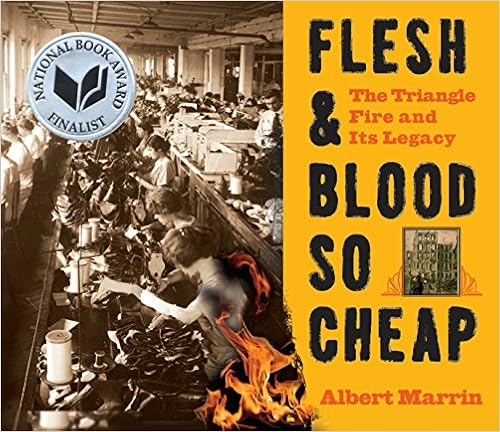
Flesh and Blood So Cheap: The Triangle Fire and Its Legacy, by Albert Marrin

Ebook Flesh and Blood So Cheap: The Triangle Fire and Its Legacy, by Albert Marrin
There are a lot of books that can be candidates to review in this current age. However, it may be difficult for you to read and also finish them simultaneously. To conquer this problem, you need to select the first book and also make plans for other publications to review after ending up. If you're so overwhelmed, we advise you to choose Flesh And Blood So Cheap: The Triangle Fire And Its Legacy, By Albert Marrin as your analysis source.
When including Flesh And Blood So Cheap: The Triangle Fire And Its Legacy, By Albert Marrin, we feel truly certain that this book can be a good material to read. Reviewing will certainly be so pleasurable when you like guide. The subject as well as exactly how guide exists will certainly influence just how somebody enjoys learning more and also more. This book has that component making lots of people fall in love. Also you have few mins to spend everyday to check out, you can really take it as benefits.
Beginning with visiting this site, you have attempted to start loving reviewing a book Flesh And Blood So Cheap: The Triangle Fire And Its Legacy, By Albert Marrin This is specialized website that market hundreds compilations of publications Flesh And Blood So Cheap: The Triangle Fire And Its Legacy, By Albert Marrin from lots sources. So, you will not be tired more to select the book. Besides, if you likewise have no time to search the book Flesh And Blood So Cheap: The Triangle Fire And Its Legacy, By Albert Marrin, just rest when you're in workplace and also open the web browser. You could find this Flesh And Blood So Cheap: The Triangle Fire And Its Legacy, By Albert Marrin inn this website by attaching to the internet.
The choice of you to read this publication is not based upon the force to review it. it will start to make you feel that this publication is really correct to check out in this time. If often you will likewise write your suggestions right into a book, finding out type this publication is a great way. Flesh And Blood So Cheap: The Triangle Fire And Its Legacy, By Albert Marrin is not just the reading book. It is a book that has fantastic experience of the world. Guide motivates to obtain better future. This is the reason why you ought to read this book, even the soft documents book, you can get it. This is exactly what you require now to test your principle of behavior.
Review
Starred Review, Publishers Weekly, January 17, 2011:"Published to coincide with the centennial anniversary of the 1911 fire that erupted in the Triangle Shirtwaist Factory, this powerful chronicle examines the circumstances surrounding the disaster...Marrin's message that protecting human dignity is our shared responsibility is vitally resonant."Starred Review, Booklist, April 1, 2011:"Sure to spark discussion, this standout title concludes with source notes and suggested-reading lists that will lead students to further resources for research and debate."Starred Review, School Library Journal, May 2011:"The writing is compelling and detailed, and the author effectively manages to bridge the gap between detached expository writing and emotionally charged content...this is a useful and thoughtful addition to any American history collection."
Read more
About the Author
ALBERT MARRIN is the author of numerous highly regarded nonfiction books for young readers, including Years of Dust; The Great Adventure: Theodore Roosevelt and the Rise of Modern America; and Sitting Bull and His World. His many honors include the Washington Children's Book Guild and Washington Post Non-Fiction Award for an "outstanding lifetime contribution that has enriched the field of children's literature," the James Madison Book Award for lifetime achievement, and the National Endowment for Humanities Medal.
Read more
See all Editorial Reviews
Product details
Age Range: 10 and up
Grade Level: 5 - 6
Lexile Measure: 1000L (What's this?)
amznJQ.available('jQuery', function() {
amznJQ.available('popover', function() {
jQuery("#lexileWhatsThis_db").amazonPopoverTrigger({
showOnHover: true,
showCloseButton: false,
title: 'What is a Lexile measure?',
width: 480,
literalContent: 'A Lexile® measure represents either an individual's reading ability (a Lexile reader measure) or the complexity of a text (a Lexile text measure). Lexile measures range from below 200L for early readers and text to above 1600L for advanced readers and materials. When used together Lexile measure help a reader find books at an appropriate level of challenge, and determine how well that reader will likely comprehend a text. When a Lexile text measure matches a Lexile reader measure, this is called a "targeted" reading experience. The reader will likely encounter some level of difficulty with the text, but not enough to get frustrated. This is the best way to grow as a reader - with text that's not too hard but not too easy.',
openEventInclude: "CLICK_TRIGGER"
});
});
});
Paperback: 192 pages
Publisher: Yearling; Reissue edition (February 10, 2015)
Language: English
ISBN-10: 0553499351
ISBN-13: 978-0553499353
Product Dimensions:
8 x 0.5 x 9.2 inches
Shipping Weight: 1.4 pounds (View shipping rates and policies)
Average Customer Review:
4.1 out of 5 stars
34 customer reviews
Amazon Best Sellers Rank:
#601,599 in Books (See Top 100 in Books)
This book is ostensibly about the March 25, 1911 fire at the Triangle Waist Factory which killed 146 workers because of inadequate fire protection and locked doors. In reality, though, it is the story of poor, mostly immigrant workers and their families struggling to make it in the "New World". It's the story of the struggle for rights - labor rights, women's rights, etc. - that has recurred on a cyclical basis as each new generation has had to relearn the importance of and fight for the rights which previous generations also struggled for. Although the story of the Triangle Waist Fire is all but forgotten today (a tragedy in itself, hopefully remedied in large part by Albert Marrin's powerful book), its legacy continues to this day.Marrin opens with a bare bones account of the fire and a brief glimpse of life in New York City around the early twentieth century. But to understand the fire and its context, one must first understand the people and the social conditions involved. So Marrin backs up his story to explore the lives of immigrants - mostly Italians and Russian Jews, particularly women and girls - who made up the bulk of the menial labor force in the garment industry around the turn of the century. Due to economic and political pressures in their own countries, these immigrants were pressed to venture to America with little more than the clothes on their backs and the money for their fare. They endured harsh conditions only to find a new life of hardship packed tightly into the tenements of New York City. But this new life, as hard as it was, offered relative safety and opportunity for advancement not to be had in the Old World, so they worked hard and made the most of it.Those who had come before, meanwhile, had already achieved their success, and the rich among them lived in lavish mansions along "Millionaire's Row" dining on lobster and smoking cigarettes rolled in hundred dollar bills. The contracts in material life was stark, but the real inequality came in the non-material aspects: basic rights, education, working conditions and quality of life. There was none of the social "safety net" which we today take for granted (and which therefore is gradually being eroded), so every man and woman (and many children) had to rely on him or herself, the family, and perhaps the neighborhood.Marrin next documents the change in working conditions that led to the creation of the Triangle Waist Factory. Originally all clothes were hand-sewn and tailor-made for the individual wearer (the poor would wear ill-fitting cast-offs from those better off). But the invention of things like the sewing machine, paper patterns, and cloth cutters gave birth to manufactured clothes. These clothes brought a feeling of democracy because even most of the poor could afford decent clothes, but it also brought the rise of the sweatshop, where individual parts of the clothing production process were done assembly-line style in various tenements with "schleppers" hauling materials between locations.The Triangle Waist Factory as one of the first modern "New-Model" factories in which all parts of the production process were brought under one roof. This saved a great deal of money for the manufacturers and even had some benefits for the workers - cleaner air and better light, for instance. But it also took workers out of smaller, local family-controlled work environments and made them "wage slaves" under the watchful eyes of supervisors who made them work long hours, cheated them of break time, docked their pay for supplies and accidents, and locked them into the factory.The factory did give workers one other significant benefit, however - the opportunity to meet and organize, albeit often surreptitiously. Although factory owners worked hard to prevent it, often using violent means, workers eventually formed unions and began demanding their rights through protests and strikes. Marrin gives a nice overview of the often rather sordid history of unions and labor relations, including the use of mob violence by both sides. Women were initially shut out of unions, but the garment workers (who were mostly women) formed their own. These unions were supported (to a point, anyway), by some wealthy women of the "Mink Coat Brigade". Through their perseverance, the unions eventually won some rights, including reduced hours and protections from cheating and wage docking.None of those new benefits, however, were enough to save many of the workers of the Triangle Waist Factory. This chapter is particularly gut-wrenching and heart-breaking. No one knows for sure how the fire started (although illicit smoking by male cutters is the most likely culprit), but once it started, it engulfed everything in the "fireproof" building within minutes. No sprinklers were available to douse the fire and frightened, unprepared workers ran madly to escape the smoke and flames. Some found stairwell doors locked. Some simply flung themselves out the windows, perhaps hoping to grab onto rungs of the fire ladders which reached only to the sixth floor.The tragedy and outrage of the Triangle Fire could not be ignored, and it gave workers a platform and a voice they would not otherwise have had. In the wake of the fire it soon became politically expedient - even necessary - to initiate investigations against businesses who were formerly ignored. The owners of the Triangle Waist Factory were prosecuted (although acquitted), other factories were investigated, laws were changed, and decent labor and safety standards were decreed (and even enforced somewhat, although not uniformly). Although it was always an uphill struggle, workers eventually earned many of the "New Deal" rights we enjoy today.In the final chapter, Marrin explores the world of labor relations and "sweatshops" today, both in New York City where new waves of immigrants work in re-constituted sweatshops, and abroad where the majority of our clothes and many other items are made by Asian workers earning a few dollars a week. Marrin also explores the flip side of the issue, for if workers in poor areas don't have sweatshops, then they have nothing - no way to earn a living or feed their families. Of course, the hope would be that those workers too can organize and demand better wages, benefits and working conditions (admittedly easier said than done in today's globalized world).I highly recommend this book. It should be required reading in middle and high school history courses and every adult should read it too, especially those who believe that if only the government would stop interfering, "market forces" would work out for everyone's benefit. In the early twentieth century, businesses had few pesky regulations to dictate their actions and, among other things, 146 people lost their lives in an unsafe factory. We can have similar incidents again if we're not careful.
In this National Book Award Finalist, Marrin provides a thorough overview of the conditions and events that lead up to and contributed to the Triangle Waist Company fire. He also discusses what happened afterwords and how it might have been prevented. He goes on to highlight the fact that such sweatshops and factories are still with us today, both inside and outside the United States. He makes it clear that the labor movement is far from over. He also looks at both sides of the issue, those who support such shops and those who do not. This can leave the impression that sweatshops do have a place in society, but I don't think that is what he was trying to say. I believe he was just showing why people work in such factories and shops. I did find it a bit jarring to leap from the early 1900s all the way to present day. It would have been nice to have more information on what happened in between the two time periods. I appreciated the numerous quotes and stories of real people who were there. In fact the most powerful part of this book are the quotes from eyewitnesses.
Fascinating book. It covered the Triangle Fire but also the rise of the labor unions and how immigrants changed the face of America. Highly recommend it as a social history. It is written to be understood by high school aged students.
The school give this book as redding work for summer. My 11 year old and my self like a lot this book because bring part of history that happen in NY that we know very little. This book not only tell you about the Triangle Fire but give you a back ground of the people that was involve and living the conditions of the time.
I was disappointed with the scant information on the actual event. I wanted more info on the working conditions, human cost and sympathy than the employers savings. The amount the employers got for each burned body, versus the amount given to the families of these victims is abhorrent. The title of this book shows that.
This is a must read for anyone in the industrial safety business or even just office safety. This explains the tragedy that led to lighted exit signs and fire escapes.
Very nice, interesting
Bought the book to review for a graduate course in the Progressive Era. Easy to read format.
Flesh and Blood So Cheap: The Triangle Fire and Its Legacy, by Albert Marrin PDF
Flesh and Blood So Cheap: The Triangle Fire and Its Legacy, by Albert Marrin EPub
Flesh and Blood So Cheap: The Triangle Fire and Its Legacy, by Albert Marrin Doc
Flesh and Blood So Cheap: The Triangle Fire and Its Legacy, by Albert Marrin iBooks
Flesh and Blood So Cheap: The Triangle Fire and Its Legacy, by Albert Marrin rtf
Flesh and Blood So Cheap: The Triangle Fire and Its Legacy, by Albert Marrin Mobipocket
Flesh and Blood So Cheap: The Triangle Fire and Its Legacy, by Albert Marrin Kindle
0 comments:
Post a Comment