Ebook Free
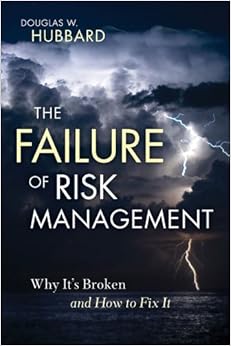
We are showing up again to offer you a suggested certified publication. is one that has top quality book to check out. When starting to review, you will see initially the cover and title of the book. Cover will certainly have large amount to draw in the viewers to get guide. And also this publication has that component. This book is advised for being the admiring book. Also the subject is similar with others. The plan of this publication is a lot more attractive.

Ebook Free
Have you found a brand-new book to meet your vacations to check out? Do you plan for looking it? When somebody just have plans to have vacations and also trips to choose some individuals, there some others that additionally look for the books to utilize the spare time. It is not type of tough methods to overcome this issue. Nowadays, the sophisticated technology is worried in order to help you in doing anything.
Nonetheless, this period additionally allow you to obtain the book from many resources. The off line publication shop might be a typical area to see to obtain guide. And now, you could also locate it in the internet collection. This website is among the on-line library where you can discover your selected one to read. Now, today is a book that you can locate here. This publication tends to be the book that will certainly provide you brand-new motivations.
So why do you should read this publication? The solution is extremely easy. This publication is very appropriate to just what you have to obtain currently. This book will help you to solve the problem that occurs today. By reading this book, you can make sure to on your own just what to do more. As understood, analysis is additionally popular as a crucial activity to do, by everyone. Never ever scared to take brand-new activity in your life!
It's no any faults when others with their phone on their hand, and you're too. The difference might last on the material to open up When others open up the phone for chatting and also speaking all points, you could in some cases open as well as review the soft data of the Naturally, it's unless your phone is available. You could likewise make or save it in your laptop or computer system that eases you to review .
Product details
File Size: 2967 KB
Print Length: 304 pages
Publisher: Wiley; 1 edition (April 6, 2009)
Publication Date: April 6, 2009
Sold by: Amazon Digital Services LLC
Language: English
ASIN: B0026LTMAU
Text-to-Speech:
Enabled
P.when("jQuery", "a-popover", "ready").execute(function ($, popover) {
var $ttsPopover = $('#ttsPop');
popover.create($ttsPopover, {
"closeButton": "false",
"position": "triggerBottom",
"width": "256",
"popoverLabel": "Text-to-Speech Popover",
"closeButtonLabel": "Text-to-Speech Close Popover",
"content": '
});
});
X-Ray:
Not Enabled
P.when("jQuery", "a-popover", "ready").execute(function ($, popover) {
var $xrayPopover = $('#xrayPop_9D6A06AA427411E9838399A28A210B31');
popover.create($xrayPopover, {
"closeButton": "false",
"position": "triggerBottom",
"width": "256",
"popoverLabel": "X-Ray Popover ",
"closeButtonLabel": "X-Ray Close Popover",
"content": '
});
});
Word Wise: Enabled
Lending: Not Enabled
Screen Reader:
Supported
P.when("jQuery", "a-popover", "ready").execute(function ($, popover) {
var $screenReaderPopover = $('#screenReaderPopover');
popover.create($screenReaderPopover, {
"position": "triggerBottom",
"width": "500",
"content": '
"popoverLabel": "The text of this e-book can be read by popular screen readers. Descriptive text for images (known as “ALT textâ€) can be read using the Kindle for PC app if the publisher has included it. If this e-book contains other types of non-text content (for example, some charts and math equations), that content will not currently be read by screen readers.",
"closeButtonLabel": "Screen Reader Close Popover"
});
});
Enhanced Typesetting:
Enabled
P.when("jQuery", "a-popover", "ready").execute(function ($, popover) {
var $typesettingPopover = $('#typesettingPopover');
popover.create($typesettingPopover, {
"position": "triggerBottom",
"width": "256",
"content": '
"popoverLabel": "Enhanced Typesetting Popover",
"closeButtonLabel": "Enhanced Typesetting Close Popover"
});
});
Amazon Best Sellers Rank:
#141,220 Paid in Kindle Store (See Top 100 Paid in Kindle Store)
This is a very handy work on risk management. Douglas Hubbard, the author, takes the "field" of risk management to task for many practitioners simply not having a clue and doing a disservice to their organizations. He emphasizes quantification and abhors the "soft" risk management practices that are all-too-common. His introductory lament sets the book's tone (Page xi): "Unfortunately, risk management based on actual measurements of risks is not the predominant approach in most industries." More directly (Page xii): ". . .much of what has been done in risk management, when measured objectively, has added no value to the issue of managing risk. It may actually have made things worse."Parts I and II lay out the nature of the "crisis" and why this sad state of affairs has occurred. Part I notes that many weak methods have been adopted, not providing much assistance to organizations. In Part II, he notes the four major approaches to risk management (what he terms the "Four Horsemen)": (a) actuaries focus is on assessing and managing risk in insurance and pensions); (b) War Quants (use probabilistic risk analysis, decision, analysis, and operations research); (c) economists management of risk in portfolios); (d) management consultants (tendency to be more intuitive, relying on individual experience--an approach he likens to "snake oil" (page 71). His preference is the use of quantitative approaches and an understanding of uncertainty and probability. In the process, he emphasizes the work of those scholars following in the footsteps of psychologists Amos Tversky and Daniel Kahneman (whose works I have reviewed elsewhere), who point out the inherent biases in "intuitive" approaches. In the process, he takes some well deserved shots at the approach of Nassim Nicholas Taleb, well known for his work "The Black Swan."Part III addresses "Howe to fix it." Here, Hubbard goes through approaches and techniques that he views as legitimate and actually contributing to risk management. In a generally readable analysis, he indicates to readers how risk management ought to be carried out.All in all, a useful volume. I appreciate the critique of the "soft" approaches to risk management. For those involved in security and risk analysis, this would be a useful volume.
When I attended a course on risk management for my masters degree in engineering management, I was very disappointed with the prescribed book. It contained very shallow principles on risk management and an overview of some approaches. It did not really equip me as a manager to know the history of risk management (how it developed and why); and where it is heading to. It also did not tell me the strengths and weaknesses of risk management models and approaches.previously I have read "how to measure anything" from Hubbard and thought that a book about measurement taught me more about risk management than risk management books. Then I read this one that put everything together in a single book. Hubbard can be "evangelistic" in promoting his approach, but he provides an exceptional overview of the risk management landscape and how it evolved over the years. He also puts his head on a block and probably offends many authors in calling the weaknesses to their approaches to risk management (and in some cases he even demonstrates the weaknesses with research findings or examples). He goes further by providing recommendations on how risk management could be tackled.I highly recommend this book for people interested in tackling risk management, or just wanting a general overview of risk management.I should warn that he is very single minded in promoting quantitative risk modelling, which is not suitable to complex domain issues (see the Cynefin framework). But what I do take home with me is that we are able more often to perform quantitative risk modelling than we think we can. And it is a superior way of managing risk when compared to qualitative methods (such as the infamous risk matrices)
This is a decent introduction to quantitative risk assessment. Unfortunately, like many risk "management" books, it focuses 95% of its energy on risk assessment and 5% on risk mitigation (in this case, about 1/2 of Chapter 2). Perhaps changing the title to "Failure of Risk Assessment" would be more fitting.I find myself about where I was when I finished reading the author's other book (How to Measure Anything): sold on the concept of measuring risks, but completely lost about what to do when I've completed the measurement. If you have already read that book, the value proposition of this book is less clear. If you haven't read that book, go do so immediately.
A thorough assessment of current risk assessment methods and their shortcomings. Hubbard takes the reader through some historic events that showcase shortcomings in different fields in regards to risk management. Rooting his points in both case studies and citations to a multitude of other research, Hubbard provides reasoning for the found flaws in how risk is handled today. A favorite component for all of Hubbard's work has always been the vast amount of background research, there is never a shortage of avenues for readers to look for further information. After providing this relatively comprehensive debunking of many widely used techniques, Hubbard offers some solutions involving a larger reliance on quantitative methods and the scientifically proven method of estimation calibration training.
I purchased this book thinking it would be half why risk management is broken and half how to fix it. Instead, the author spends nearly all of the book explaining in mostly non-mathematical terms, why he is smarter than everyone else. There are multiple vignettes about how the author shut down a supposed expert in a public venue and everyone clapped.This book does a good job explaining why most businesses have poor risk management programs (because they aren't filled with statisticians). This book does a poor job offering any structured methodology for creating a successful risk management program.
PDF
EPub
Doc
iBooks
rtf
Mobipocket
Kindle
0 comments:
Post a Comment